
See photos of November’s supermoon — the brightest in nearly 70 years.
الكاتب: kafej
-
Girls to design Africa’s first private space satellite
Story highlights
Africa will launch its first private satellite into space
It’s been built by schoolgirls
CNN
—
They may be teenagers, but 17-year-old Brittany Bull and 16-year-old Sesam Mngqengqiswa have grand ambitions – to launch Africa’s first private satellite into space in 2019.
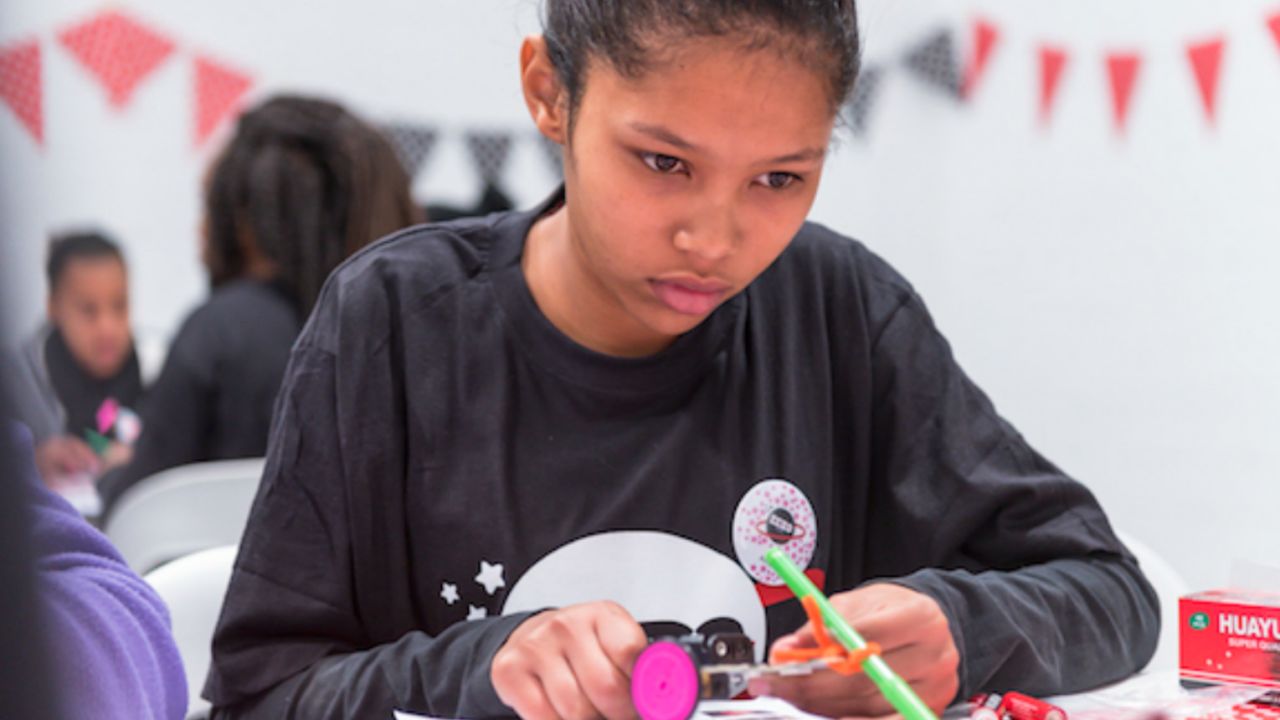
They are part of a team of high school girls from Cape Town, South Africa, who have designed and built payloads for a satellite that will orbit over the earth’s poles scanning Africa’s surface.
Once in space, the satellite will collect information on agriculture, and food security within the continent.
Using the data transmitted, “we can try to determine and predict the problems Africa will be facing in the future”, explains Bull, a student at Pelican Park High School.

“Where our food is growing, where we can plant more trees and vegetation and also how we can monitor remote areas,” she says. “We have a lot of forest fires and floods but we don’t always get out there in time.”
Information received twice a day will go towards disaster prevention.
It’s part of a project by South Africa’s Meta Economic Development Organization (MEDO) working with Morehead State University in the US.
Africa’s journey to space
The girls (14 in total) are being trained by satellite engineers from Cape Peninsula University of Technology, in a bid to encourage more African women into STEM (science, technology, engineering, mathematics).
If the launch is successful, it will make MEDO the first private company in Africa to build a satellite and send it into orbit.
“We expect to receive a good signal, which will allow us to receive reliable data,” declares an enthusiastic Mngqengqiswa, of Philippi High School. “In South Africa we have experienced some of the worst floods and droughts and it has really affected the farmers very badly.”
Drought and environmental effects from climate change have continued to plague the country in recent years. An El Niño induced drought led to a shortfall of 9.3 million tons in southern Africa’s April 2016 maize production, according to a UN report.
“It has caused our economy to drop … This is a way of looking at how we can boost our economy,” says the young Mngqengqiswa.

Initial trials involved the girls programming and launching small CricketSat satellites using high-altitude weather balloons, before eventually helping to configure the satellite payloads.
Small format satellites are low cost ways of gathering data on the planet quickly. Tests so far have involved collecting thermal imaging data which is then interpreted for early flood or drought detection.
“It’s a new field for us [in Africa] but I think with it we would be able to make positive changes to our economy,” says Mngqengqiswa.
Ultimately, it is hoped the project will include girls from Namibia, Malawi, Kenya, and Rwanda.
Mngqengqiswa comes from a single parent household. Her mother is a domestic worker. By becoming a space engineer or astronaut, the teenager hopes to make her mother proud.
“Discovering space and seeing the Earth’s atmosphere, it’s not something many black Africans have been able to do, or do not get the opportunity to look at,” says Mngqengqiswa.
The schoolgirl is right; in half a century of space travel, no black African has journeyed to outer space. “I want to see these things for myself,” says Mngqengqiswa, “I want to be able to experience these things.”
Her team mate, Bull agrees: “I want to show to fellow girls that we don’t need to sit around or limit ourselves. Any career is possible – even aerospace.”
-
What parents should know about the VR gear kids want

Story highlights
Virtual reality headsets range from inexpensive Cardboard to pricey PlayStation
Here are your options if you want to dip your toe in or really swim with the VR big fish
Thinking about treating your family to a little virtual reality this holiday? Have no idea where to start? Don’t worry.
From Google’s inexpensive Cardboard VR viewer to Sony’s new PlayStation VR, this guide will help you figure out what makes sense for your family’s interests, needs, and budget. Here are your options if you want to dip your toe in the water, wade knee-deep, or really swim with the VR big fish.
Keep in mind, virtual reality is a quickly changing technology, so always check out the companies’ websites, professional reviews on sites like CNET, and user reviews before you take the leap.
Virtual reality viewers are inexpensive, handheld devices that offer three-dimensional views and the feeling of being in a different place. The viewers’ lenses work by extending the depth of static images or animation but do not allow you to interact with your environment. To use them, download any app labeled “VR” in either iTunes or Google Play, launch the app, and insert your smartphone into the viewer. Most viewers use your phone’s button or another basic input to control the action.
Key features
• Inexpensive
• Compatible with most smartphones and iOS or Android apps labeled “VR” (except for the View-Master, which uses specially designed apps)
• More like a 3D movie than true VR
• Best for educational content and games
• Selection of high-quality apps is currently fairly limited. Try the New York Times’ VR Virtual Reality Stories and these recommendations.
Products in this category
• Google Cardboard ($14.99)
Literally made of cardboard, this handheld device that you put together yourself is a fun, novel way of experiencing virtual reality. Use with any smartphone and iOS or Android VR apps. Google offers lots of different viewers, including the steampunk-looking Google Tech C-1 Glass VR Viewer ($14.99).
• SmartTheater Virtual Reality Headset ($19.99)
This is a comfortable viewer with adjustable lenses, a head strap, and an easy-to-use trigger input. Comes with a cardboard, handheld motion-controller that adds some oomph to games. Works with most smartphones and any iOS or Android VR apps.
• View-Master Virtual Reality ($29.99)
Geared for learning rather than gaming, the View-Master is available in a range of packages that let you explore dinosaurs, space, wildlife, and more. Each pack includes insertable picture reels (your phone provides the horsepower). Works with most smartphones and specially designed View-Master iOS or Android apps.
Digital tools to turn game-obsessed kids into genuine game designers
Moving up in price and features are VR headsets. They’re similar to viewers in that you download VR apps from the app store and insert your phone in them. Headsets work with the exact same apps as the viewers (except for the Samsung Gear VR and Google Daydream Viewbut give you a more immersive experience.
The advantages of headsets are that they’re more comfortable to wear for a longer time, they fit better (preventing light leaks), they have better lenses, and they often have earphone ports. That’s why some people like to use them to view videos. They don’t make the videos three-dimensional, but they provide a personal-movie-theater-type experience. They also typically have built-in game controllers on the headset itself or work with handheld controllers, giving you more options in apps than you would have with a simple viewer.
Key features
• Pricier than viewers
• Compatible with most smartphones (except the Samsung Gear VR and Google Daydream View) and iOS or Android apps labeled “VR”
• More believable, you-are-there experience, but limited ability to interact with your environment
• Good for games, educational content, and movie viewing
• Selection of high-quality apps is currently fairly limited. Try the New York Times’ VR Virtual Reality Stories and these recommendations.
• Headsets have minimum age requirements set by the manufacturers; check the age before you buy.
Products in this category
• Merge VR Goggles ($79)
This big purple headset is made of flexible foam and has audio ports and dual input buttons for easy game control. Works with most iOS and Android VR apps.
• Google Daydream View ($79; shipping November 2016)
Made of fabric, this lightweight plush headset is designed specifically for Google’s brand-new Daydream VR platform. The platform includes Daydream-compatible phones (such as the company’s Pixel phone), apps, and controllers. Daydream View comes with a controller and the company says there will be 50 apps at launch, including games, educational content, and streaming services.
• Samsung Gear VR ($99)
Designed exclusively for Samsung phones, the Gear VR includes an input pad on the side of the headset and works with bluetooth controllers, both of which let you navigate games easily. Works with Gear VR-compatible games (including Minecraft Gear VR Edition).
• VR Kix Virtual Reality Headset ($49.99)
Individually adjustable lenses, a snug fit, and a smartphone tray you can customize to your phone make the Kix a good option for quality VR on any smartphone. Works with most iOS and Android VR apps.
5 ways video games can help kids with special needs
Right now, the only VR gaming console is offered by Sony. The company’s just-in-time-for-the-holidays PlayStation VR headset works with the PlayStation 4. If you don’t have a PS4 already, you could buy the PlayStation 4 Slim or a PlayStation 4 Pro (also brand-new for the holidays) and the PSVR. The headset plus the horsepower provided by the console provides an immersive, interactive VR experience.
Key features
• Expensive
• Limited to Sony PlayStation
• Totally immersive and interactive; potential for motion sickness
• Games tend to be mature but plentiful, including Batman Arkham VR, 100ft Robot Golf, Final Fantasy XV VR, Battlezone, and Resident Evil 7.
• Sony’s recommended age minimum is 12.
Products in this category
• PlayStation VR Launch Bundle ($499.99)
Includes everything you need to turn your PS4 into a VR machine, including a headset, a camera, two motion controllers, a game, and cables.
• PlayStation 4 Slim ($299.99); PSVR sold separately
A newly redesigned, slimmer version of the PS4, this one has improved graphics, a lighted controller, and runs quieter.
• PlayStation 4 Pro ($399.99); PSVR sold separately
Better graphics, faster action, and optimized to work better with specific “Pro-Enhanced” games
What parents need to know about technology addiction
You may have heard of the ominous-sounding Oculus Rift and HTC Vive. These are the ultra-powerful VR headsets that provide a fully immersive experience; some call it “the Holodeck” in reference to the alternate reality from Star Trek. Both require high-end, powerful PCs (which cost upwards of $500).
Key features
• Super expensive
• Require compatible games (for example, Everest VR is a Vive exclusive) and high-powered computers
• Full interactivity with your environment
• Games tend to be mature, including The Assembly and Deus Ex Mankind Divided.
• Best for families with teens; Oculus Rift’s manufacturer age minimum is 13; Valve states the Vive is “not for children.”
Products in this category
Join the conversation
- See the latest news and share your comments with CNN Health on Facebook and Twitter.
• HTC Vive ($799)
Offers a “room-scale experience.” If your kids play on the Steam gaming network, they’ve certainly seen ads for the HTC Vive, as it’s made by the same company, Valve, that owns Steam. Steam is offering some Vive-only games designed to take advantage of this headsets’ unique capabilities.
• Oculus Rift ($599)
Comes with everything to make VR a reality – except the computer: a headset, a sensor, a remote, cables, an Xbox controller, and a game.
-
Winners of the ‘Oscars of watches’ on show at Dubai

CNN
—
The winners of this year’s “Oscars of watchmaking” have been chosen, with a wide range of time pieces recognized for their engineering perfection and eye-catching design.
An industry jury chose the world’s best watches in fifteen different categories including sports, jewellery and travel time watch, with the awards presented by the Grand Prix d’Horlogerie de Genève (GPHG) in Geneva earlier this month.
The grand prize for the world’s best watch, the Aiguille d’Or Grand Prix, was awarded to the Chronomètre Ferdinand Berthoud FB 1 from Ferdinand Berthoud.
This limited-edition white gold and titanium time piece, which retails for more than $200,000, has a leather strap and is powered by a hand-wound movement comprised of more than 1,120 components.
The Public Prize, chosen by votes submitted internationally online and at select international watch exhibitions, was awarded to the 33 bis Quai des Bergues by Czapek Genève.
The winning watches were shown in Seoul, Rome and Geneva before they arrived in Dubai on November 15 for their final hurrah at Dubai Watch Week.
Watches from Audemars Piguet, Montblanc, MB&F, Piaget, TAG Heuer and Tudor brands, along with Chanel, Eberhard & Co, Fabergé and Grönefeld, were also honored by this year’s 27-person international jury.
Check out the gallery above to see the full list of this years winners.
-
Flying a sports car with wings

Story highlights
The intuitive amphibious ICON A5 looks like a sports car
It does require a sports pilot license to fly it
Tampa, Florida
CNN
—
When it comes to piloting a plane, I have zero experience.
In fact, I’ve never even considered attempting it.
Nevertheless, as we swoop over Florida’s Tampa Bay on a gorgeous November morning, I enthusiastically take over the controls of the ICON A5, a two-seater amphibious plane that looks like a sports car, maneuvers like a jet ski and is so intuitive, the company says that even a novice can learn to fly it in less than 30 hours.
At 23 feet long and weighing in a 1,510 pounds, it’s known as a sea light-sport aircraft.
Designed to help you focus on the freedom of flying without worrying if the plane will react unpredictably, there’s nothing else quite like it on the market.
Now that I’m in control, my whole body tenses for a good five minutes. Am I really ready to pilot this shiny new machine all by myself? I’m not entirely sure.
However, I take comfort in the fact that the A5 was built specifically for people like me, and it was designed to drive like a car.
Plus, the fact that Icon’s CEO and founder, Kirk Hawkins, is next to me in the cockpit doesn’t hurt either. He can take over the controls at any time.
So far, so good.
We glide smoothly through the air at about 1,000 feet, and I’m comfortable enough to take in the sights. Lovely Fort De Soto Park doesn’t disappoint.
Personal airplane revolution
Squiggles of dreamy white dunes are surrounded by water that looks like it should be in the Caribbean.
The Sunshine Skyway Bridge, with its series of long-spanning cables, is equally impressive.
The adrenaline is still racing. And as most surreal experiences go, it just keeps getting better.
For starters, there’s another ICON A5 to my left, which is thrilling in itself. We are flying in formation, and my job is to mimic its movements. You’d think this would be intimidating, but it’s not.
It’s just plain fun.
That’s music to Hawkins’ ears. He’s the brains behind this newfangled plane, an idea 10 years in the making.
As a former Air Force F-16 pilot and a Stanford Business School grad, he has focused most of his adult life on making sport flying available to the masses.
“The idea for us was to create an airplane where the average human being can go out and experience the world without having the burden of becoming a professional pilot,” he says.
So it makes sense that the dashboard looks like what you see in your car. There are only a few gauges that I don’t recognize.
“It’s the Apple approach to things,” he says. “You humanize it, and make it intuitive and easy and cool.”
He’s so confident people will want to fly (and buy) his planes that he just opened a flight-training facility at Peter O. Knight Airport.
Located on Davis Island, five minutes from downtown Tampa, it’s a place where both beauty and sailboats abound.
The company’s other training center is in Vacaville, California, where ICON is headquartered.
By 9 a.m., it’s time for a brief water-landing pitstop.
Hawkins takes over the controls. I’ve been too busy learning to fly in formation (not something non-pilots get to try very often) and interviewing Hawkins to even think about learning to do a water landing myself. It’s something Hawkins tells me most people can master in about 30 minutes.
A few negative-Gs and 360-degree turns later and it becomes a fun roller-coaster ride in the sky. Plus, it’s an open-air flight, so I occasionally flop my arms out. Just because I can.
At a few hundred feet above the water, it’s easy to spot a boater waving at us, a flock of pelicans and even stingrays.
“We’re gonna pull over here and stop and get out for a second,” he says.
Surely he’s kidding, right? But after landing the plane on the water, he takes off his seatbelt, and I realize he’s not.
Sky pioneers: A light aircraft revolution is taking off
Seconds later, he pops the roof and we climb onto the wings, which could easily double as diving boards. Suddenly, this feels less like a plane outing and more like I’m on a boat sunbathing.
Everything is drenched in a mesmerizing golden hue. I can imagine picnicking on the beach nearby. Or taking the plane somewhere for a remote weekend camping trip.
Because the plane has a range of about 430 miles on a full tank, it’s made for short getaways.
“This entire thing is about inspiring people,” he explains. “Once you learn to fly, you will never be the same. You will look at the sky different, you will look at the planet different.”
“The primary motor skills for operating a plane are pretty easy,” Hawkins tells me. “We have people landing by themselves with an instructor on their very first day, within 30 minutes.”
That said, they’ve painstakingly taken the time to design it for safety. The goal of the spin-resistant airframe feature is that if the pilot makes mistakes, the airplane doesn’t lose control.
As a backup, there’s a complete airplane parachute.
“The spin resistance feature is a big deal as it’s the first airplane that the FAA has deemed spin-resistant,” says Chris Dupin, a flight instructor and US Air Force officer. “A significant number of general aviation fatalities are from loss of control accidents that involve an unrecovered spin on the base to final turn.”
Plus, there’s the angle of attack indicator, something you don’t typically see in a light aircraft. It shows you where the wing is happy (in the green) or where it could stall (in the red).
The pilot’s job is to keep the wing within the green or yellow section of the gauge. This is part of what makes water takeoffs and landings so easy to learn.
“Kirk Hawkins has an extremely creative and innovative idea for pilot training that is more intuitive; teaching the feel of flight first and the principals and structure later, not unlike how people learn to drive,” says Christine Negroni, veteran aviation journalist and author of “The Crash Detectives.”
“The world is facing a pilot shortage, so the idea of teaching differently, so that different learning styles can be accommodated could very well expand the pool of pilot candidates.”
On that note, about 40% of the folks who’ve put down deposits for the ICON A5 are not pilots, which means this plane is drawing aviation newbies.
After an hour and a half of flying time, Hawkins lands us on the airport runway, a maneuver that you can tackle after you’ve mastered several water landings. It’s a bit trickier since it requires more precision and knowledge about crosswinds.
At this point, if I owned this plane, I’d hook it up to a trailer, fold the wings up, drive it home, and park it in the garage.
If you want your own ICON A5, get in line. More than 1,800 customers have put deposits down.
For those who aren’t ready to shell out $207,000 to buy one, there’s the option of stopping by ICON’s training facility in Tampa, or the facility in Vacaville, California, to fly for the day.
The Sport Flying Introduction class is 1.5 hours for $595. To snag your Sport Pilot License, you will need to spend 20-plus hours and pricing varies.