Rescue ops enter third day at site of tunnel collapse in north Indian state | News
Rescue ops enter third day at site of tunnel collapse in north Indian state | News
Heavy machinery has been brought in to pull out nearly 40 workers trapped inside the highway tunnel in the Himalayan state of Uttarakhand.
Excavators have begun drilling with heavy machinery to fix a wide steel pipe that will help pull out almost 40 Indian workers trapped inside a collapsed Himalayan highway tunnel that caved in two days ago in the north Indian state of Uttarakhand.
The 4.5km (2.7-mile) tunnel, which was being built on a national highway as part of a Hindu pilgrimage route, caved in at about 5:30am on Sunday (24:00 GMT on Saturday).
“We have been supplying food, water and oxygen to the trapped labourers and the officials are in continuous touch with all of them,” Devendra Singh Patwal, a disaster management official, said on Tuesday.
More than 100 rescue workers are using heavy machinery to drive a steel pipe with a width of 90cm (nearly three feet), wide enough for the trapped men to squeeze through the rubble, the government’s highway and infrastructure company said.
Members of rescue teams pictured during the rescue operation in Uttarakhand [SDRF handout via Reuters]
Patwal said it was not easy to ascertain the time required to pull out the workers. A team of geologists from the state government and educational institutions had arrived to determine the cause of the accident, he added.
“Our biggest breakthrough is that we have established contact and there is a supply of oxygen and food,” Uttarkashi district’s top civil servant Abhishek Ruhela told AFP news agency on Tuesday.
“Whatever is necessary for their survival is being done.”
Oxygen was being pumped into the tunnel and small food items like dry fruit were being provided to the workers, he added.
Photographs released by government rescue teams soon after the collapse showed huge piles of rubble blocking the wide tunnel, with twisted metal bars from its roof poking down in front of slabs of concrete.
The region is prone to landslides, earthquakes and floods and the incident follows events of land subsidence in the state that geologists, residents and officials have blamed on rapid construction in the mountains.
The work on the tunnel stretch commenced in 2018 and was initially intended to be completed by July 2022, which has now been delayed to May 2024, an Indian government statement said.
The Char Dham pilgrimage route is one of the most ambitious projects of Prime Minister Narendra Modi’s government. It aims to connect four important Hindu pilgrimage sites of north India through 889km (551 miles) of a two-lane road being built for $1.5bn.
But some work has been halted by local authorities after hundreds of houses were damaged by subsidence along the routes, including in ecologically fragile Uttarakhand.
Accidents on large infrastructure projects are common in India.
In 2021, at least 200 people, most of them construction workers, were killed after part of a Himalayan glacier broke away, causing flash floods in Uttarakhand in a disaster that experts partly blamed on excessive development.
الرئيس الإندونيسي يحث بايدن على بذل المزيد لوقف “الأعمال الوحشية” في غزة
الرئيس الإندونيسي يحث بايدن على بذل المزيد لوقف “الأعمال الوحشية” في غزة
دعا الرئيس الإندونيسي جوكو ويدودو الولايات المتحدة الإثنين إلى بذل المزيد من الجهود لوقف “الأعمال الوحشية” في غزة، مطالبا بوقف إطلاق النار في الصراع بين إسرائيل وحركة المقاومة الإسلامية (حماس). وقال ويدودو بعد لقاء مع نظيره الأمريكي جو بايدن في البيت الأبيض: “تناشد إندونيسيا الولايات المتحدة بذل المزيد من الجهد لوقف الأعمال الوحشية في غزة. وقف إطلاق النار أمر لا بد منه من أجل الإنسانية”.
نشرت في:
2 دقائق
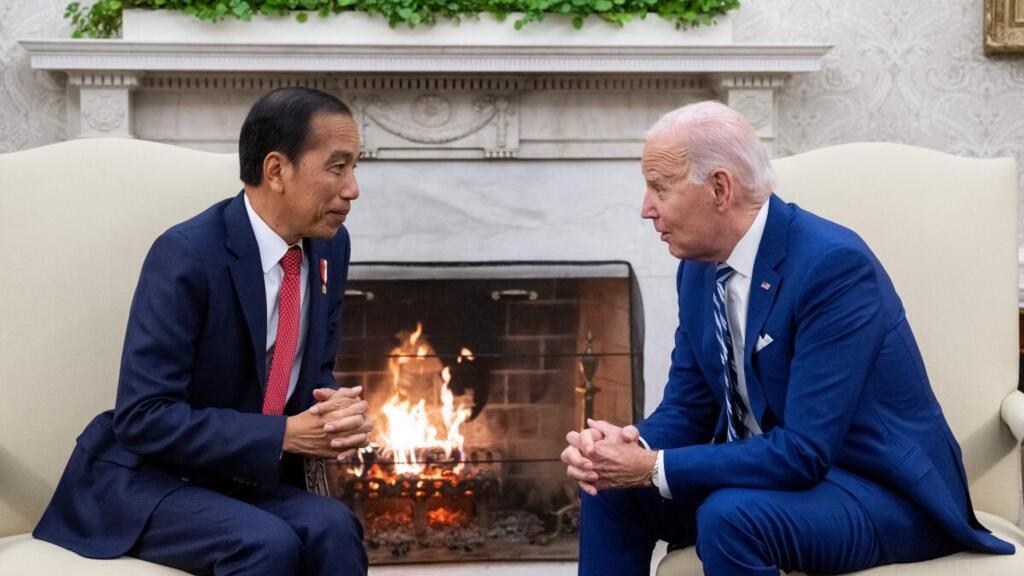
طالب الرئيس الإندونيسي جوكو ويدودو نظيره الأمريكي جو بايدن خلال زيارة إلى البيت الأبيض الإثنين بـ”فعل المزيد” من أجل وقف إراقة الدماء في قطاع غزة، والتوصل لوقف لإطلاق النار بين إسرائيل وحركة حماس.
وألقت الحرب الدائرة بين إسرائيل وحماس بظلالها على القمة الأمريكية-الإندونيسية، التي كان من المفترض أن تعزز التعاون بين واشنطن وجاكرتا، في الوقت الذي يحاول فيه البيت الأبيض توطيد تحالفاته في مواجهة الصين.
وخلال لقائهما في المكتب البيضاوي بالبيت الأبيض، قال ويدودو مخاطبا بايدن إن “إندونيسيا تناشد الولايات المتحدة فعل المزيد لوقف الفظائع في غزة”.
وأضاف أن “وقف إطلاق النار ضروري من أجل الإنسانية”.
وكان الرئيس الإندونيسي قال الأحد إنه سينقل لبايدن “الرسالة شديدة اللهجة” التي صدرت عن القمة العربية-الإسلامية التي استضافتها الرياض نهاية الأسبوع الماضي، وأدانت إسرائيل، ودعت إلى وقف الحرب الدائرة منذ السابع من تشرين الأول/أكتوبر.
كما قال ويدودو الأحد: “أنا أحمل أيضا رسالة محددة من الرئيس الفلسطيني محمود عباس، الذي طلب مني أن أنقلها إلى الرئيس جو بايدن” وتتعلق بهذه الحرب.
وكان مسؤولون أمريكيون قالوا إن بايدن سيحض نظيره الإندونيسي خلال قمتهما في البيت الأبيض الإثنين على القيام “بدور أكبر” من أجل وقف الحرب بين إسرائيل وحماس.
والأحد، قال مسؤول أمريكي رفيع المستوى للصحافيين: “سيكون من الضروري الاستماع إلى وجهة نظر إندونيسيا بشأن النزاع الدائر في الشرق الأوسط… أعتقد أن الرئيس سيتطلع إلى أن تلعب إندونيسيا دورا أكبر”.
وأضاف أن ذلك سيشمل “قضية وقف إطلاق النار” والأهداف طويلة الأمد مثل حل الدولتين وإعادة إعمار قطاع غزة.
وأوضح أن بايدن “يريد الإنصات باهتمام إلى ما سمعه الرئيس ويدودو” في القمة المشتركة لجامعة الدول العربية ومنظمة التعاون الإسلامي التي أدانت “الجرائم” التي ترتكبها إسرائيل بحق الشعب الفلسطيني في قطاع غزة
والأسبوع الماضي، نفت إندونيسيا الاتهامات الإسرائيلية بأن مستشفى في غزة بني بتمويل إندونيسي تقع تحته أنفاق لحماس ويجاور منصة لإطلاق صواريخ على الدولة العبرية.
اتهامات لأشخاص مرتبطين بأذربيجان بالوقوف وراء حملة تشويه سمعة أولمبياد باريس 2024
اتهامات لأشخاص مرتبطين بأذربيجان بالوقوف وراء حملة تشويه سمعة أولمبياد باريس 2024
وجهت فرنسا اتهامات لأشخاص مرتبطين بأذربيجان بوقوفهم وراء حملة تضليل تهدف إلى تشويه سمعة فرنسا كمضيفة للألعاب الأولمبية المقررة الصيف المقبل في العاصمة باريس. ووفقا لتقرير صادر عن هيئة الرقابة الرقمية الحكومية الفرنسية “فيجينوم”، بدأ تحقيق في أواخر تموز/يوليو بعد مشاركة “العديد من الصور المرئية التي تدعو إلى مقاطعة أولمبياد 2024” على نطاق واسع على موقع “إكس” (تويتر سابقا).
نشرت في:
2 دقائق
اتهمت باريس الإثنين أشخاصا مرتبطين بأذربيجان بوقوفهم وراء حملة تضليل تهدف إلى تشويه سمعة فرنسا كمضيفة للألعاب الأولمبية المقررة الصيف المقبل في العاصمة.
وارتفعت حدة التوترات الدبلوماسية بين فرنسا وأذربيجان، بعدما اتهمت الدولة السوفياتية السابقة باريس بدعم عدوتها اللدود أرمينيا واتباع سياسة “العسكرة” في جنوب القوقاز.
تبذل فرنسا قصارى جهدها لاستضافة ألعاب أولمبية ناجحة بين 26 تموز/يوليو و11 آب/أغسطس المقبلين.
ووفقا لتقرير صادر عن هيئة الرقابة الرقمية الحكومية الفرنسية “فيجينوم”، بدأ تحقيق في أواخر تموز/يوليو بعد مشاركة “العديد من الصور المرئية التي تدعو إلى مقاطعة أولمبياد 2024” على نطاق واسع على موقع “إكس” (تويتر سابقا).
ويشتبه التقرير بأن قرابة 90 حسابا وراء هذه المنشورات، وقالت “فيجينوم” إن 40 منها تم إنشاؤها في تموز/يوليو 2023 ونشرت “محتوى وحيدا” يدعو إلى مقاطعة ألعاب باريس 2024.
وكشف التحقيق أنه من بين هذه الحسابات التسعين، “كان لنسبة كبيرة رابط واحد على الأقل بأذربيجان” مثل صورة تظهر العلم الأذربيجاني أو مقتطفات من خطابات الرئيس الأذربيجاني إلهام علييف.
وقال التقرير إن الأخطاء الإملائية في كتابة أسماء بعض المناطق الفرنسية مثل بوردو ومونبيلييه، كانت “علامة أخرى على عدم الأصالة”.
وحددت هيئة الرقابة أيضا حسابا يشكل أصل المحتوى الذي بدأ نشره لاستهداف ألعاب باريس 2024، قائلة إن حساب MuxtarYev الذي نشر 15 صورة تدعو إلى المقاطعة وأعيد نشرها على حسابات غير حقيقية على موقع “إكس” مرتبطة بأذربيجان، “يعزز فرضية المناورة المنسقة”.
ويزعم الحساب الذي أنشئ في حزيران/يونيو 2023، أن موقعه أذربيجان.
ويتطابق اسم موكستار ناجييف وصورة الملف الشخصي للحساب مع هوية رئيس منظمة مقاطعة سابيل التابعة لحزب أذربيجان الجديدة، الحزب الحاكم في الدولة السوفياتية السابقة.
وبحسب التقرير، يمكن أن يكون المواطن الأذربيجاني أورخان رزاييف الذي يدير شركتين من بينهما “ميديامارك ديجيتل”، مرتبطا بحملة التشهير.
Detainees walk free after Australian High Court’s ‘life-changing decision’ | Courts News
Detainees walk free after Australian High Court’s ‘life-changing decision’ | Courts News
Melbourne, Australia – Dozens of people have been walking out of immigration detention in Australia after the High Court ruled indefinite detention was illegal.
While the arbitrary detention of asylum seekers and refugees is a breach of international law, successive Australian governments have continued to detain refugees arbitrarily since a 2004 decision found it legal under Australian domestic law.
But that all changed on November 8 when the High Court ruled the practice was unlawful.
Following the decision, 80 people – refugees as well as people held by immigration for other reasons – were released immediately into the community, with at least 92 more eligible for release. Experts say 300 more cases could also be affected by the decision.
“This is a hugely significant decision, which will have life-changing consequences for people who have been detained for years without knowing when, or even if, they will ever be released,” Josephine Langbien, a senior lawyer at the Human Rights Law Centre, told Al Jazeera.
“People who have lost years of their lives may finally have a chance at regaining their freedom and returning to their families and communities.”
While Australia provisionally accepts 13,500 people each year for resettlement through the United Nations High Commissioner for Refugees programme, those arriving by other means – such as by boat from Indonesia – are detained in prison-like facilities.
Since 2013, Australia has implemented Operation Sovereign Borders, which the government describes as “a military-led border security operation.”
Detention in harsh offshore processing centres is another arm of this policy, which the Australian government says is necessary to assess refugee status and possibly grant a temporary visa.
However, Human Rights Watch, Amnesty International and other human rights organisations have long argued the policy contravenes international law including the UN Refugee Convention – which forbids arbitrary detention of refugees and stipulates that seeking asylum is not illegal – and the Convention Against Torture.
Australia’s hardline immigration policy has seen refugees and asylum seekers sent to offshore detention centres in remote Pacific islands [File: Mike Leyral/AFP]
Critics, such as author and former detainee Behrouz Boochani, also say the aim of the policy is to create conditions so onerous that potential refugees are deterred from seeking asylum in Australia in the first place.
Langbien told Al Jazeera that on average, refugees have been detained for an average of 708 days either on the Australian mainland or in offshore detention facilities in remote islands such as Nauru.
“Earlier this year, the government disclosed that the longest period it had detained a person in immigration detention was 5,766 days – that is nearly 16 years,” she said.
In comparison, the United States holds refugees for 55 days, while in Canada, refugees are held for just two weeks before a decision is made on whether they can remain in the country.
‘Not prison’
The plaintiff in the High Court case was a Rohingya man using the pseudonym NZYQ who had been detained indefinitely due to a lack of deportation options. As a Rohingya, he cannot return to Myanmar where the mostly Muslim minority was stripped of their citizenship in the 1980s and targeted in a brutal military crackdown in 2017.
Controversially, however, NZYQ had previously been convicted of child sex offences, had been jailed and had his visa revoked.
Under normal circumstances, a non-Australian would be deported after serving a sentence for such serious crimes.
But because NZYQ was without citizenship when he was released on parole in 2018, the Australian government was unable to do so.
As such, NZYQ remained in detention with no realistic prospect of removal and it was this indefinite detention the court ruled illegal under the Australian Constitution.
“The court found that indefinite detention is beyond the constitutional limits of the government’s power,” said Langbien.
Langbien also told Al Jazeera it was important to recognise that while NZYQ had committed a serious offence, he had served his sentence and should be released into the community like any other offender would be under domestic law.
“Immigration detention is not prison,” she said. “These two systems [immigration law and criminal law] are and must be entirely separate. The constitution does not allow immigration detention to be used for punitive purposes. The Australian government has never had the right to use immigration detention as a way to punish people or to extend sentences.”
The decision overturns the 2004 precedent in the High Court case known as Al Kateb, which ruled a stateless Palestinian man’s indefinite detention was lawful within the realm of Australian law.
Yet, Langbien said this should never have been the case and that the ruling will extend to more than just people who are stateless, but to many who cannot return to their country of origin for reasons such as fear of persecution.
“The High Court’s decision will bring about the release of people who should have been released many years ago,” she told Al Jazeera.
“Everyone, regardless of their citizenship or visa status, has the right not to be unlawfully or arbitrarily detained by our government.”
‘A beautiful joy’
While there were celebrations as dozens of detainees were released, the abrupt freedom has created a new set of challenges for people who have endured the prolonged uncertainty of indefinite incarceration.
Hannah Dickinson, the principal solicitor and head of the Legal, Human Rights Law Programme at the Asylum Seeker Resource Centre, told Al Jazeera that the reaction from those who had been released was “quite extraordinary and very moving”.
“We’re receiving texts from our clients with pictures of them with their families. They’re driving home from the detention centre, finally, after 10 years separated. So there’s a beautiful joy.”
However, she added there was also concern.
“There is a fearfulness and also a pain arising from having been detained for that long and a worry that something is going to be done to take that freedom away,” she said.
Minister for Immigration Andrew Giles said the safety of the community was paramount because some convicted criminals were among those freed [Mick Tsikas/AAP Image via AP Photo]
Refugees who are released into the Australian community are often placed on restrictive temporary visas which include limits on work and are often subject to regular review.
Dickinson told Al Jazeera that visas issued to those released last week “had 18 conditions attached”.
“And they might be things like reporting conditions. They might be things like the type of work a person can undertake. And they typically include conduct conditions like not committing any criminal offending. They’re very comprehensive and quite restrictive in nature,” she said.
Ian Rintoul, from the Refugee Action Coalition, said the government has a responsibility to ensure a supportive transition into the community.
“The government can’t just dump these people, who have been held unlawfully for years, into the community without proper support,” he said.
“Indefinite detention has been a serious breach of human rights that has had devastating consequences including suicide and other self-harm attempts.”
Their extended detention means many of those held will find it difficult to establish a new life.
“Many have lost families and family connections as a result of the years in detention. They have lost income, lost years of possible study that has limited their life opportunities,” Rintoul said.
“Many of them have mental health issues caused by the years of unlawful immigration detention that will make finding work and holding down a job a real challenge.”
Minister for Immigration Andrew Giles would not comment on the future implications of the High Court’s decision, stressing the need to “ensure community safety is upheld”.
Among those released over the past week is Sirul Azhar Umar, who was part of the security detail for then-Malaysian Defence Minister Najib Razak and was sentenced to death for the high-profile killing of Mongolian translator Altantuya Shaaribuu. Sirul fled to Australia pending his appeal and while he was later arrested, Australia does not deport people to countries that maintain the death penalty.
In response to Al Jazeera, the Department of Home Affairs noted the full judgement had yet to be made public, and declined to comment on whether any legislative amendments would be made to close the legal loophole created with respect to the aim of Operation Sovereign Borders.
“The Department is currently considering the High Court’s orders and decision,” the department said in a statement. “The High Court has yet to provide written reasons for its decision, therefore it would be inappropriate to comment on the matter.”
Wellington Koo says tax investigation is aimed at dissuading Foxconn founder Terry Gou from running for president.
Taipei’s national security chief has said a Chinese tax probe into Taiwan tech giant Foxconn is “political” as its billionaire founder Terry Gou is running for president of the democratically ruled island.
Gou, who gave up Foxconn’s management reins four years ago, launched his presidential bid in August as an independent candidate in Taiwan’s January polls.
The Chinese state-run Global Times reported last month that Foxconn – one of the world’s largest contract producers of electronics and a key supplier for Apple’s iPhones – was under a “normal and legitimate” investigation for tax and land issues by mainland authorities.
Chinese authorities have not confirmed the probe and Foxconn has said it will cooperate on “operations concerned” while urging “confidence” in the company.
Taiwan’s National Security Council head said on Monday there was a “political aspect” to the Foxconn probe as election analysts have predicted that Gou’s entry into the race could split the opposition vote.
“They [China] certainly don’t want Terry Gou to run,” Wellington Koo, whose department falls under President Tsai Ing-wen, told reporters.
“Based on our observations, China does not want Terry Gou to split votes [within the pro-Beijing camp],” he said.
When Gou entered the race, some critics alleged his relationship with Beijing was a cosy one given Foxconn’s numerous mainland factories, but he said he had “never been under the control of the [Chinese Communist Party]”.
Taiwan is claimed by Beijing, which dislikes the Democratic Progressive Party’s government under Tsai as she has said the island does not belong to China.
Koo added that Foxconn has also been looking to diversify its supply chain lines away from China, which could “also be a factor” in prompting an investigation from Chinese authorities.
“If all assembly lines are moved out under the request of major US brands, the harm to China will be significant,” Koo said.
His comments echoed others made by Taiwan’s top officials, including Deputy Premier Cheng Wen-tsan, who said Taiwanese businesses in China should not be subject to “political interference”.
Foxconn is China’s largest private-sector employer, with more than a million workers nationwide.
But the country’s strict COVID policies – as well as a bout of industrial unrest and ongoing diplomatic tensions with the United States – have hurt production.
In May, it bought a huge tract of land on the outskirts of Indian tech hub Bengaluru and has since announced plans to expand its India operations.
Analysts say Gou has a slim chance of winning, with DPP candidate Vice President Lai Ching-te currently in the lead.